
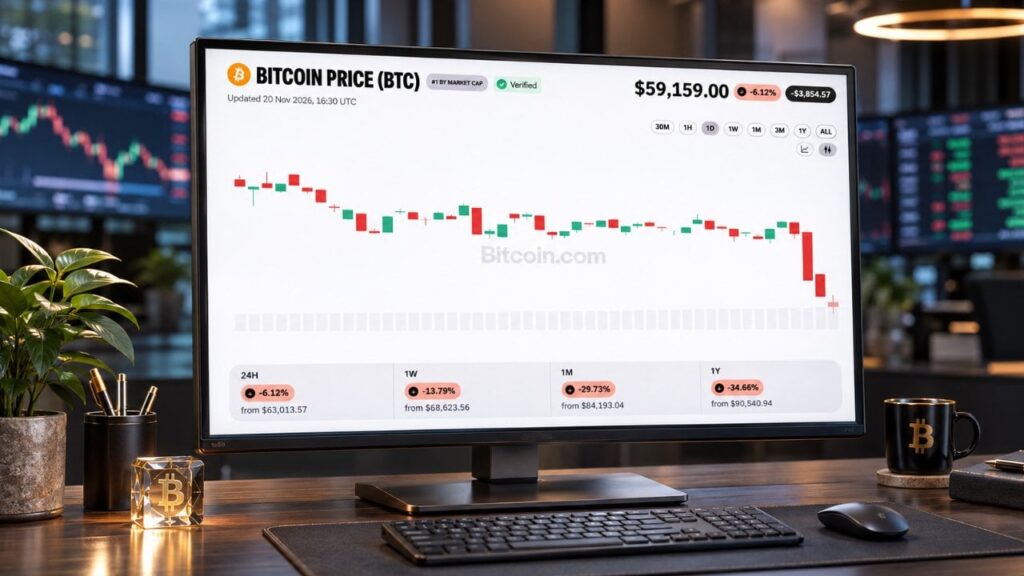
Bitcoin Hits Lowest Price Since 2024 After Peter Brandt Warns of Deflation
Key Takeaways
- Bitcoin traded below $58,000 on Friday, marking its lowest price since September 2024.
- The price fell more than 15% over a week and nearly 54% from its record.
- Brandt predicted deflation as financial assets and commodities slid.
Bitcoin Breaks Below $58,000
Veteran trader Peter Brandt warned on Nov. 20 that financial-market and commodity declines would most likely lead to deflation, hours before bitcoin plunged below $58,000. His forecast concerned a potential drop in consumer prices across the economy rather than a specific bitcoin price target.
Financial markets trade assets such as stocks, bonds, and bitcoin. Raw material markets include metals, energy, and agricultural products. Brandt linked the sell-off across those markets to his forecast of positive returns on interest-bearing assets after accounting for deflation. He wrote:
“Not sure many are so aware, but we are witnessing in the financial and raw material markets a melt-down that most likely will lead to deflation, meaning positive interest rate return.”
At 2:20 p.m. EST on Nov. 20, the bitcoin price at $57,961 was down 7.6% over 24 hours, 15% over a week and 30.9% over a month. It was nearly 54% below its record of $126,080, set Oct. 6, 2025, falling to its lowest price seen since September 2024.
Metals Slump Alongside Financial Assets
At 2:05 p.m. EST on Nov. 20, indicative December metals prices put gold futures at $3,521 an ounce, silver futures at $41.27 an ounce and copper futures at $5.49 a pound. The respective indications were down 4.3%, 7%, and 2.5% for the session.
ING found on Nov. 20 that metals selling outpaced physical weakness. Copper had dropped more than 8% and gold about 9% during the week, even as physical markets remained tight. The bank attributed part of the decline to investors reducing bullish positions.
Brandt had raised concerns about gold before his broader deflation forecast. He cautioned in October that gold’s entire earlier advance from 2025 could disappear if its decline continued. That warning concerned the metal’s price; his Nov. 20 remarks extended to financial and raw material markets.
Consumer Prices Still Rose in October
Deflation would require a sustained decline in consumer prices across the economy. If an account pays 2% interest while prices fall 1%, then its purchasing power increases by roughly 3%. Brandt’s prediction depends on falling market prices being followed by broader declines in the prices consumers pay.
The Bureau of Labor Statistics reported Nov. 10 that consumer prices rose 0.4% in October, following a 0.6% increase in September. The October reading measured household costs before the latest market declines and remained above the threshold for deflation.
The 10-year breakeven inflation rate, a bond-market gauge of average inflation expected over the next decade, stood at 2.16% on Nov. 19. That measure reflects expectations over 10 years and can coexist with shorter periods of falling prices.
Bitcoin’s price decline alone does not show that consumer prices are falling. Recent bitcoin price swings during inflation show how its value can diverge from changes in the cost of living. The next U.S. consumer-price report, covering November, is scheduled for Dec. 10.