
What is USDT0? Tether’s omnichain dollar explained
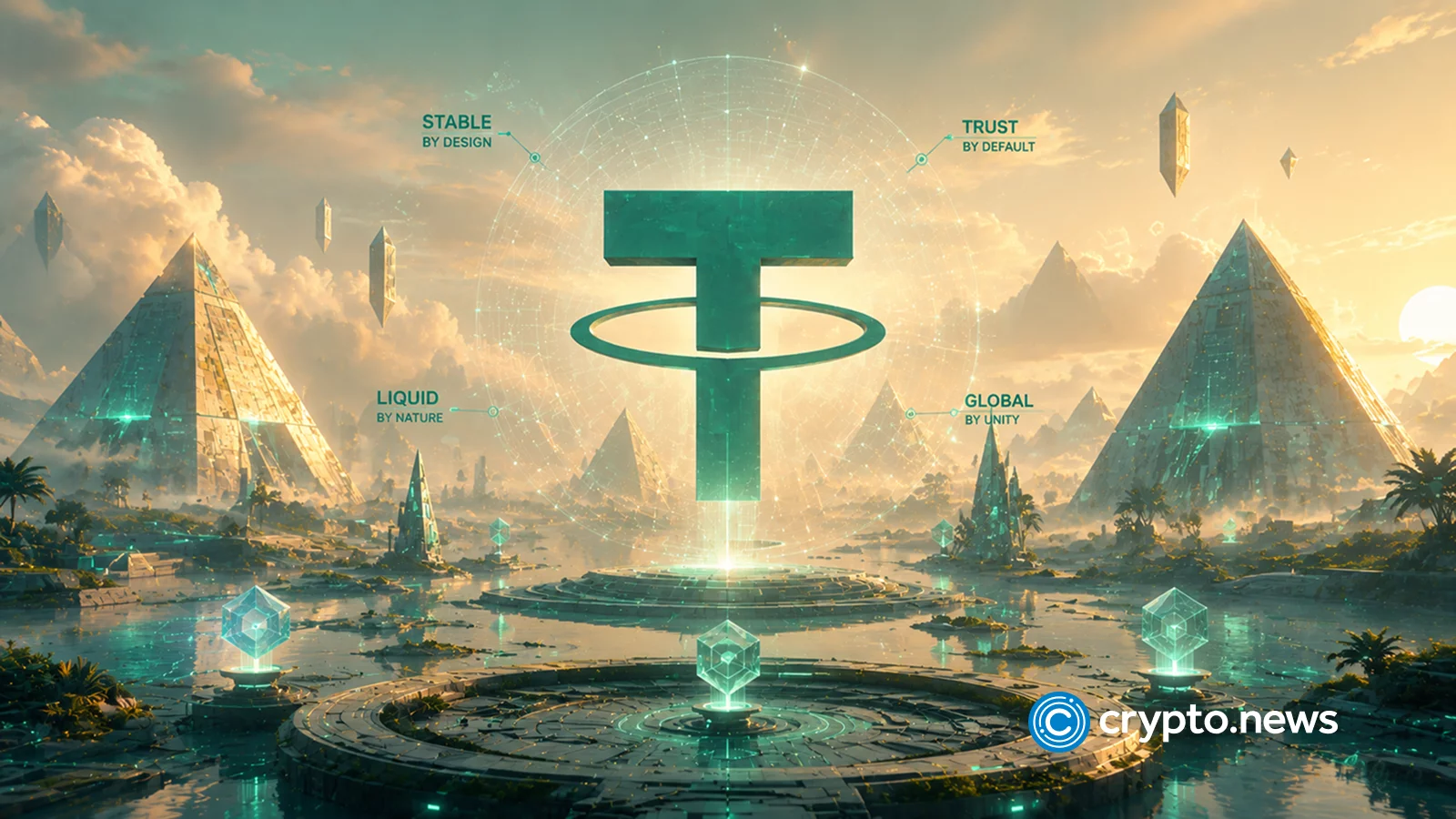
The world’s largest stablecoin now travels between blockchains as USDT0, a version its builders insist is not a wrapped token, while its mechanics lock collateral in an Ethereum vault and mint claims elsewhere. Here is how it actually works, who runs it, what the trust stack contains, and why a gas tank on a new chain runs on it.
Summary
- USDT0 is the omnichain version of Tether’s USDT, launched in January 2025, that lets the world’s largest stablecoin operate on blockchains where Tether has not deployed a native contract.
- It runs on LayerZero’s Omnichain Fungible Token standard: real USDT is locked in a contract on Ethereum, and USDT0 is minted one-to-one on destination chains, with transfers executed by burn-and-mint messaging, not bridge liquidity pools.
- It is operated not by Tether but by Everdawn Labs under license, a structural nuance that defines the trust stack: holders carry Tether’s reserve risk plus the lockbox contract plus LayerZero’s verification layer.
- The system has scaled fast: more than $50 billion in cumulative transfers by late 2025, daily volumes in the hundreds of millions, deployments across chains from Arbitrum to Plasma, and a starring role as the native gas token of Stable’s payments chain.
- The marketing insists USDT0 is not a wrapped token. The mechanics are lock-and-mint. Resolving that tension honestly is most of what a holder needs to understand.
Every successful monetary instrument eventually faces the geography problem: the money is in one place, and the demand is in another. Gold solved it with certificates, banks with correspondent accounts, and Tether, whose USDT is the most used digital dollar on earth, faced it acutely by 2024, when the stablecoin’s natural habitat, Ethereum and Tron, no longer contained the frontier of activity.
New chains launched monthly, each wanting the deepest dollar in crypto, and Tether’s options were unattractive: deploy a native USDT contract on every chain, multiplying operational and compliance surface with each launch, or let third-party bridges wrap USDT into a zoo of incompatible IOUs, the wrapped-asset sprawl that fragmented liquidity and produced some of crypto’s worst exploits.
USDT0, launched in January 2025, is the third option: one canonical collateral pool, on Ethereum, feeding a single standardized representation that travels anywhere, minted and burned by cross-chain messages instead of shuffled through bridge pools.
Eighteen months later, it has moved more than $50 billion cumulatively, colonized the new-chain frontier, and become something no wrapped asset ever was: the native gas token of an entire blockchain. Its operators insist, emphatically, that it is not a wrapped token. Its mechanics are a lockbox and a mint. Both statements are doing work, and understanding the gap between them is the point of this guide.
The mechanics, step by step
USDT0 is built on LayerZero’s Omnichain Fungible Token standard, OFT, and the cleanest way to understand it is to follow one dollar through the system.
Start with issuance. A market maker or exchange holding native USDT on Ethereum deposits it into the USDT0 lockbox, a smart contract on Ethereum mainnet that serves as the system’s single collateral vault. Upon deposit, an equal amount of USDT0 is minted on the destination chain of choice, Arbitrum, Berachain, HyperEVM, Plasma, Stable, or any other connected network. The mainnet USDT never leaves the vault; what circulates elsewhere is the omnichain representation, backed one-to-one by the locked collateral, with supply across all chains reconciled against the vault’s balance and attested through on-chain proof-of-reserves.
Now move it. When a holder sends USDT0 from chain A to chain B, no asset crosses anywhere. The OFT contract on chain A burns the tokens; LayerZero’s messaging layer carries a verified instruction to chain B; the contract on chain B mints the same amount to the recipient. The verification is the system’s load-bearing component: each message is attested by a configurable set of Decentralized Verifier Networks, DVNs, independent parties that confirm the source-chain burn actually happened, and delivered by an executor on the destination chain.
Because transfers are burn-and-mint against one canonical pool, there are no per-chain liquidity pools to drain, no slippage between chain versions, and no bridge inventory to exploit in the way that destroyed earlier designs; the attack surface concentrates instead in the messaging layer and its verifier configuration, which is where any honest risk analysis must spend its time.
Exit works in reverse: burn USDT0 anywhere, unlock native USDT from the Ethereum vault, redeem through Tether’s ordinary channels. The system also extends beyond the dollar, with the same architecture carrying XAUT0, the omnichain version of Tether Gold, and the roster of connected chains has grown to include most of the venues where new stablecoin activity concentrates.
Who actually runs it
Here is the structural fact most coverage elides, and it matters more than any throughput statistic: USDT0 is not operated by Tether.
The system is built and run by Everdawn Labs, a separate company operating under license from Tether, announced as the deployment partner in January 2025 for chains where Tether chose not to run a native mint. Tether’s relationship to the system is that of licensor, collateral issuer, and, as of February 2026, strategic investor in LayerZero Labs itself, an investment that formalized the alignment between the dollar, its omnichain vehicle, and the messaging layer underneath both. The arrangement mirrors patterns elsewhere in stablecoin infrastructure, where issuers increasingly delegate chain expansion to specialized partners instead of operating every deployment themselves.
For a holder, the delegation defines the trust stack, and the stack should be enumerated, not gestured at.
Layer one: Tether’s reserve risk, the same exposure any USDT holder carries, that the collateral behind the dollar is what the attestations say.
Layer two: the lockbox, an Ethereum smart contract whose integrity secures the entire omnichain supply; a flaw there is a flaw everywhere at once.
Layer three: LayerZero’s messaging, specifically the DVN configuration chosen for USDT0, since the verifiers who attest cross-chain messages are the parties who could, in a failure or compromise scenario, authorize mints that should not exist.
Layer four: Everdawn’s operational competence across all of it. Native USDT on Ethereum or Tron is a direct claim on Tether. USDT0 on a frontier chain is a claim on locked USDT, mediated by a contract, a messaging protocol, a verifier set, and an operator.
In calm conditions, the distinction is invisible, the tokens are fungible in practice, and the peg has held. The distinction exists for the other conditions, which is what trust stacks are for.
Wrapped or not? Adjudicating the claim
Everdawn’s positioning is explicit: USDT0 is not a wrapped token or a synthetic asset; it is USDT, extended across blockchains. The mechanics described above are, equally explicitly, lock-and-mint, the same skeleton as every wrapped asset since WBTC. Both claims can be examined honestly, and the resolution is more informative than either slogan.
What the not-wrapped claim gets right is the difference in kind from the wrapped-asset era’s actual pathologies. Classic wrapping was fragmentary: every bridge minted its own IOU, so one dollar became five incompatible tokens across five chains, each backed by a different custodian or pool, each trading at its own slight discount, each an island of risk.
USDT0 is canonical and unified: one standard, one collateral pool, one supply reconciliation, fungible representations everywhere, with the issuer’s blessing and proof-of-reserves attached. It also avoids the liquidity-pool bridge model whose drained pools produced the industry’s worst losses; burn-and-mint against a vault has no inventory to steal on the transfer path. In the dimensions that made wrapped a warning label, fragmentation, unofficial issuance, pool risk, USDT0 is genuinely something else.
What the claim obscures is that the something else still has the wrapped structure’s irreducible core: the circulating asset on the destination chain is a representation, and between it and the underlying dollar sit contracts, messages, and verifiers that native USDT holders do not depend on.
The honest taxonomy is that USDT0 is an official, canonical, issuer-aligned wrapper, the best-constructed version of the category, marketed as the category’s transcendence. Holders should adopt the engineering description rather than the marketing one, not because failure is likely, the system’s eighteen months have been clean, but because the description determines where to look when evaluating any chain, protocol, or yield product built on top of it: at the DVN configuration, the lockbox, and the operator, the three components a native-USDT analysis would never need to mention.
A note on what the numbers above are measuring, because USDT0 statistics arrive in three units that coverage routinely conflates. Cumulative transfer volume, the $50 billion figure, counts every cross-chain movement since launch and grows monotonically; it measures usage of the messaging rails, and a single market maker cycling inventory daily can generate billions of it.
Daily transfer volume, the hundreds of millions, measures current throughput and is the honest activity gauge. And outstanding supply, the amount of USDT locked in the Ethereum vault backing circulating USDT0, measures adoption as a stock: how many dollars actually live on the frontier at any moment, which is the number that matters for assessing both the system’s importance and its blast radius.
The three can tell different stories simultaneously: high cumulative volume with modest outstanding supply describes a busy corridor more than a settled population, and the disciplined reader checks which unit any headline is using before concluding anything.
The public dashboards report all three, and the ratio between daily volume and outstanding supply, the velocity of the omnichain dollar, is quietly the best single indicator of what USDT0 is being used for: high velocity signals bridging and arbitrage traffic, while a falling ratio with growing supply signals the thing the system was actually built for, dollars moving to new chains and staying there.
The precedent stack: how crypto got here
USDT0’s design is best appreciated against the three generations of cross-chain dollar movement it is trying to retire, because each generation’s failure wrote one of its requirements.
Generation one was the custodial wrap, WBTC’s model applied everywhere: a trusted custodian holds the asset, a merchant mints the representation, and the trust is institutional. It worked, and it concentrated risk in single custodians whose failure would orphan every wrapped unit, a structure acceptable for one flagship asset and unworkable for a dollar meant to exist on thirty chains.
Generation two was the liquidity bridge: pools of the asset parked on both sides of a route, with transfers swapping against the inventory. This is the architecture behind the industry’s grimmest leaderboard, the Ronin, Wormhole, and Nomad exploits that together lost billions, because pooled inventory is a honeypot and bridge code guarding it became the most attacked surface in crypto.
Generation three was canonical-but-fragmented: issuers deployed native contracts chain by chain, which eliminated wrapper risk and created its own sprawl, the same dollar as incompatible deployments, unofficial bridged versions filling every gap the issuer had not reached, and users left to guess which contract address was real, a confusion that persists in every wallet’s token list today.
USDT0 is the fourth-generation answer, and its design choices map one-to-one onto the predecessors’ wounds: a single canonical collateral pool instead of custodial fragmentation, burn-and-mint messaging with no pooled inventory to drain, issuer alignment and proof-of-reserves instead of unofficial IOUs, and one standard identity across every chain instead of the address-guessing game.
What it could not design away is the residual that every cross-chain system shares: a verification layer whose honesty the whole structure rests on, which in USDT0’s case is LayerZero’s DVN configuration. The generational history is therefore the fairest way to grade the system, dramatically safer than bridges, structurally cleaner than fragmented wraps, and still, irreducibly, a machine whose security equals the integrity of the parties attesting its messages.
Crypto has not escaped that equation; it has, in USDT0, produced its most disciplined answer to it so far, with the largest dollar in the industry as the test load.
Why it matters: the gas tank case study
The clearest demonstration of what USDT0 changes arrived when Stable, the Tether-ecosystem payments chain, made it the network’s native gas token, the first time the fuel of an entire Layer 1 has been a representation of somebody’s dollar.
The design solves a real problem this publication’s stablechain coverage has examined: on general-purpose chains, users must hold a volatile native asset to move their stable one, an absurdity for payments. Stable’s v1.2.0 upgrade in February retired its earlier wrapped-gas workaround and made USDT0 the chain’s fee asset directly, so a user’s balance and their fuel are the same dollar, with simple transfers gas-exempt entirely.
None of that is possible with mainnet-native USDT, which cannot leave Ethereum; it is possible with USDT0 precisely because the omnichain layer lets a new chain import the world’s deepest dollar at launch, liquidity, brand, and users included, without waiting for Tether to deploy natively.
The same import logic explains USDT0’s spread across the frontier generally: for a new chain, connecting to the standard is the difference between launching with dollars and launching with promises.
The strategic reading completes the picture. USDT0 converts USDT from a multi-chain asset into a network: one vault, many outlets, centrally standardized, and it does so under the Tether ecosystem’s own governance, not through third-party bridges it cannot control.
Every new chain that adopts the standard deepens the moat of the underlying dollar, which is why the system’s growth, $50 billion moved, hundreds of millions daily, a gas tank on a purpose-built chain, is best understood not as bridge traffic but as the largest stablecoin building its own distribution grid. The dollar stays in the vault. The claim on it goes everywhere. Whether that is called wrapping or extension matters less than knowing which one you hold.
A final calibration on scale, because the numbers reframe what kind of object this is. USDT’s total circulation runs in the $150-billion-plus range across all chains, and USDT0’s share of it, while growing fast, remains the frontier slice: the omnichain system’s cumulative $50 billion in transfers and nine-figure daily volumes measure movement, not stock, and the locked collateral backing all outstanding USDT0 is a single-digit percentage of total USDT. That proportion is the honest size of the experiment: the vast majority of the world’s largest stablecoin still lives natively on Tron and Ethereum, where remittance corridors and exchange settlement run on decade-old rails, and USDT0 is the expansion mechanism for everywhere else, the new chains, the payments experiments, the frontier.
The proportion also explains the system’s risk posture from Tether’s side: delegating the omnichain layer to a licensed operator quarantines the frontier’s novel risks, messaging, verifiers, new-chain exposure, away from the core deployments that carry the float. If the omnichain layer ever failed, the damage would be severe for the connected chains and contained for the dollar itself, a separation that is prudent engineering from the issuer’s chair and worth internalizing from the holder’s: USDT0’s guarantees are engineered to protect USDT first.
As the frontier grows into the core, on Stable above all, that proportion will shift, and the omnichain layer’s security budget, scrutiny, and systemic weight will have to grow with it. The system’s first eighteen months earned it the benefit of the doubt. Its next test is carrying a meaningful fraction of the world’s working dollar, which is a different weight class, and the honest summary for any user is the one this guide began with: know which dollar you hold, and know the stack standing between it and the vault.
Frequently Asked Questions
What is USDT0 in one sentence?
USDT0 is the omnichain version of Tether’s USDT: real USDT is locked in a vault contract on Ethereum, and an equivalent amount of USDT0 is minted on destination blockchains, letting the stablecoin operate on networks where Tether has no native deployment, with cross-chain transfers executed by burn-and-mint messaging through LayerZero rather than traditional bridges.
Who issues and operates USDT0?
Everdawn Labs, a separate company operating under license from Tether, not Tether itself. Tether issues the underlying USDT collateral and announced the partnership in January 2025; in February 2026, it also made a strategic investment in LayerZero Labs, whose messaging standard the system uses. The delegation matters for risk analysis: USDT0 holders depend on Everdawn’s operations and LayerZero’s verification in addition to Tether’s reserves.
How is USDT0 different from bridged or wrapped USDT?
Structurally similar, institutionally different. Like wrapped assets, USDT0 is a representation backed by locked collateral. Unlike the wrapped-asset era, it is canonical and unified: one official standard with one Ethereum collateral pool, issuer alignment, proof-of-reserves, and fungible supply across chains, replacing the fragmented, unofficial IOUs of third-party bridges, and using burn-and-mint messaging with no liquidity pools to drain in transit.
What are the actual risks of holding USDT0?
A four-layer stack: Tether’s reserve risk, identical to any USDT exposure; the Ethereum lockbox contract, whose compromise would affect all omnichain supply simultaneously; LayerZero’s messaging layer, specifically the Decentralized Verifier Networks configured to attest transfers, since a compromised verifier set could authorize invalid mints; and Everdawn’s operational execution. Native USDT carries only the first layer, which is the practical difference between the two.
How large is the USDT0 system?
By late 2025, it had processed more than $50 billion in cumulative transfers, with daily volumes reported around half a billion dollars, and deployments spanning chains including Arbitrum, Berachain, HyperEVM, Flare, Ink, Unichain, Plasma, and Stable. The same architecture also carries XAUT0, the omnichain version of Tether Gold.
Why did Stable make USDT0 its gas token?
To eliminate the volatile-gas absurdity for payments: on Stable, the dollar users hold is also the fuel they spend, with simple USDT transfers exempted from gas entirely, which is impossible with mainnet-native USDT since it cannot leave Ethereum. The February v1.2.0 upgrade made USDT0 the chain’s native fee asset, retiring an earlier wrapped-gas design and making Stable the first Layer 1 fueled by a stablecoin representation.
Can USDT0 lose its peg separately from USDT?
In stressed scenarios, yes, temporarily. Because USDT0’s redemption path runs through burning the token and unlocking Ethereum collateral, disruptions to the messaging layer, verifier availability, or the lockbox could impair convertibility even while native USDT trades normally, and market prices on isolated chains could gap accordingly. In normal conditions, arbitrage keeps the representations fungible, and the system’s operating history to date has held the peg.
What should users check before relying on USDT0 on a given chain?
Three things: that the token contract is the official USDT0 deployment rather than a third-party bridge version, the DVN configuration securing that chain’s connection, documented in the official USDT0 materials, and the depth of exit liquidity, either through direct redemption paths or on-chain markets, on the specific network. For protocols building on it, the verifier configuration is the core due-diligence item. This is educational information, not financial advice.
Disclaimer: This article is for information and educational purposes only and does not constitute financial or investment advice. It describes third-party infrastructure whose parameters, deployments, and risk profile can change. Always verify official contract addresses and documentation before transacting. Always do your own research. Information is accurate as of July 24, 2026.