
USDC Leads Crypto Card Spending as Top-Ups Reach $13.8 Billion
Key Takeaways
- USDC and USDT card top-ups hit $13.8B by August 2026, pushing stablecoins into daily spending.
- Base led tracked spending at $1.2B, showing crypto card growth is spreading across multiple chains.
- Visa and Mastercard still power most cards; subsidy-free growth is next.
Stablecoin Cards Move Beyond Trading as Consumer Spending Rises
Stablecoins are starting to look less like a crypto-market utility and more like money consumers can actually spend.
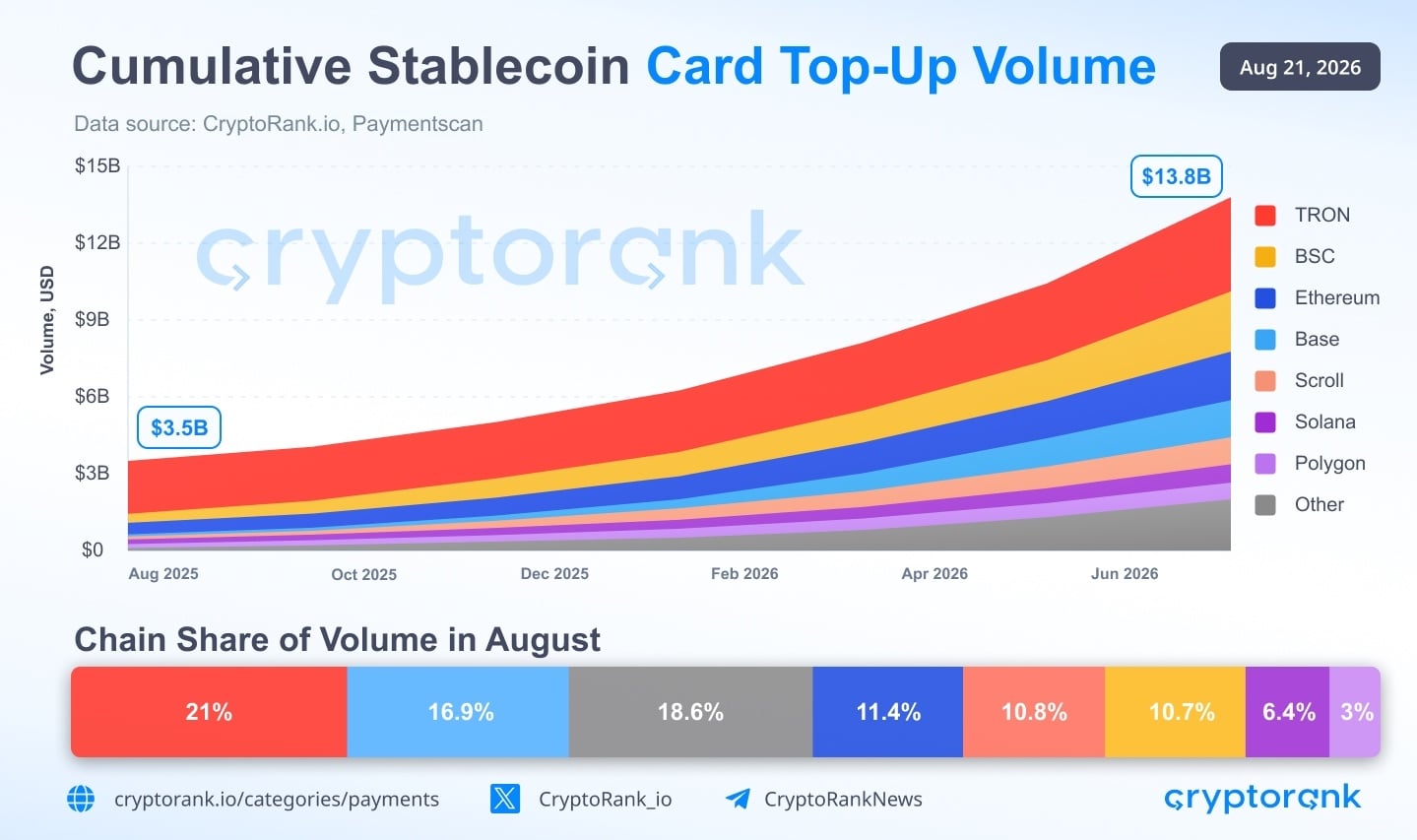
Cumulative stablecoin card top-up volume reached $13.8 billion by August 2026, up by nearly $10 billion over the past 12 months, according to research by Cryptorank. Monthly spending has continued to grow even during weaker periods for the broader crypto market.
That distinction matters. Stablecoin activity has historically been dominated by exchange settlement, trading and cross-border transfers. Crypto cards connect those balances directly to ordinary purchases, allowing a payment to start in USDC or USDT and end as a familiar card transaction at a merchant.
USDC currently leads tracked card spending, while USDT is quickly gaining share. That differs from the wider stablecoin market, where USDT remains dominant by outstanding supply.
USDC and USDT Become Everyday Payment Balances
The split reflects how the two stablecoins have developed.
USDC has grown alongside fintech integrations and payment infrastructure, making it a natural fit for card programs. USDT remains deeply embedded in exchanges, remittances, and emerging markets, giving crypto cards another route for those balances to enter everyday commerce.
Settlement is also becoming increasingly multi-chain.
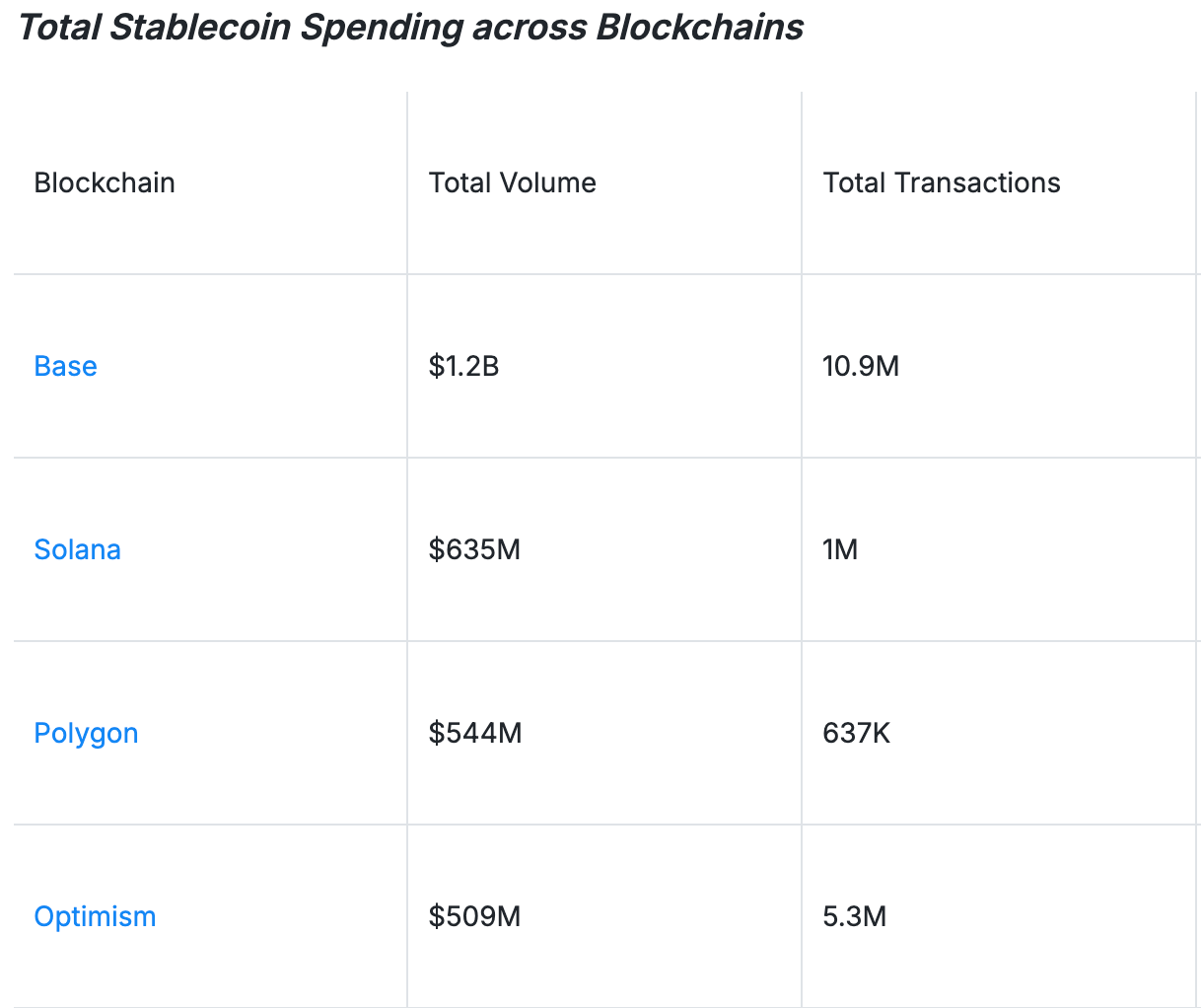
Cryptorank data shows Base leading tracked stablecoin spending with about $1.2 billion, followed by Solana at $635 million, Polygon at $544 million, and Optimism at $509 million. Arbitrum, Scroll, Ethereum, Stellar and other networks also handle meaningful activity.
The chain itself may matter less to consumers over time. What matters is whether a card can move a stablecoin balance into a payment quickly, cheaply and with minimal foreign-exchange friction.
That could also create an opening for euro-denominated assets such as EURC, particularly for users who otherwise face conversion costs when spending dollar stablecoins in Europe.
Crypto Cards Still Depend on Traditional Payment Rails
Despite their blockchain funding layer, most crypto cards do not bypass the existing payments system.
They still rely on processors, regulated issuers, identity checks, and networks such as Visa or Mastercard to reach merchants. The innovation is happening before the transaction reaches the checkout terminal.
Competition is now shifting toward custody, FX costs, rewards and capital efficiency. Some products allow users to borrow stablecoins against crypto holdings rather than sell assets outright, turning the card into a credit product as much as a payment tool.
The bigger test will come as cashback subsidies fade.
If stablecoin-funded spending keeps growing without aggressive rewards, crypto cards will have demonstrated something more important than user acquisition: that stablecoins can function as practical consumer money while merchants continue using the payment infrastructure they already have.