
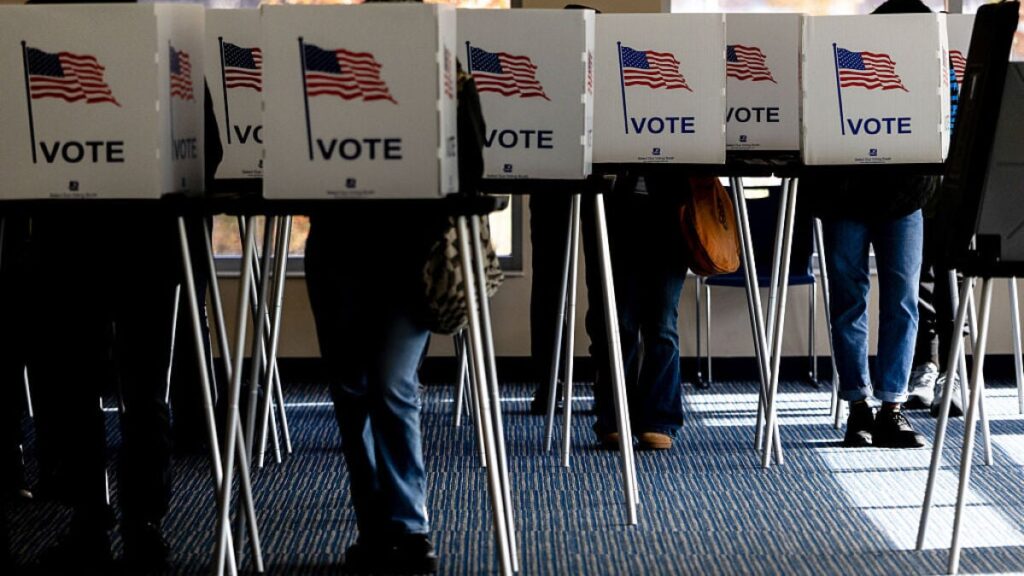
How to vote in the 2026 midterm elections
Table of Contents
The Nov. 3 midterm elections are right around the corner, and the outcome will determine the makeup of Congress and the trajectory of President Donald Trump’s remaining years in office.
So if you haven’t already voted, still need to mail in a ballot, or don’t even know where to start, the hours are counting down. For an overview of voting deadlines, drop box and polling locations, and registration information, visit Vote.org, USA.gov, or keep reading below.
How to vote by mail
More than 51 million Americans have already voted in the 2026 midterm elections. The number of people voting by mail grew substantially in 2020, and eight states now host what are known as all-mail elections or offer universal mail-in voting.
Mail ballots are sent early, with most states requiring at least a week’s lead time before Nov. 3. If you were issued an absentee or mail ballot and plan to send it by mail, your ballot must be postmarked by or on election day, not after. A late postmark can void your ballot. If you never received your ballot, contact your election office ASAP.
In some states, voters can also drop off their ballots at designated drop boxes (the websites of county registrars typically list drop box locations, such as the Los Angeles County Registrar-Recorder). Around 15 states require drop box options for voters, many located at places like libraries and parks:
-
California
-
Colorado
-
Delaware
-
Georgia
-
Florida
-
Kentucky
-
New Jersey
-
Nevada
-
Maryland
-
Michigan
-
Oregon
-
Rhode Island
-
Utah
-
Virginia
-
Washington
Another 11 states prohibit drop boxes, so make sure your ballot gets postmarked if you are registered in these states:
-
Arkansas
-
Louisiana
-
Mississippi
-
Missouri
-
North Carolina
-
Oklahoma
-
South Carolina
-
South Dakota
-
Tennessee
-
Texas
-
West Virginia
To find more rules on drop box voting, absentee voting, and voting by mail, visit your state’s registrar of voters or scroll down to the state-by-state database on Vote.org.
How to vote in person
Despite a growing number of voters skipping the polls in favor of mail, many voters still cast their ballot in person. Voters are assigned to an in-person polling location based on the address they used to register to vote, and most can start voting before Nov. 3.
Polling times vary by state, with some states offering in-person voting as early as one month before election day (this practice is usually referred to as early in-person voting). Voters with disabilities may need to go to a different polling location, depending on their accommodation needs.
What to bring to the polls
Voters do not need any special equipment or documents to cast their vote. You may need to bring a form of verification to the polls, however, depending on your state. Scroll down for more information.
Voters are also allowed to bring in personal notes, a voter’s guide, and even sample ballots into the polling booth.
Mashable Trend Report
How to find a polling place near you
Voters can find out their nearest polling location by checking their registration or calling their local registrar of voters. They can also use an online polling locator such Vote.org or the National Association of Secretaries of State (NASS).
Voting FAQ
Do I need an ID to vote?
That depends on your state. Voter ID laws vary across the country, so check with your state election officials to be sure. In some cases, you may still be able to vote without an ID by signing an identity form.
Can I track my ballot if I voted by mail?
Yes. Most states offer some form of ballot tracking for voters. Find specific information on ballot tracking via your state’s registrar website or call 866-OUR-VOTE (866-687-8683).
Can my ballot be challenged?
Yes and no. Ballots can’t be challenged without a real legal basis under the National Voter Registration Act. A voter purge, in which election workers “clean up” voter databases by deleting names, can’t be conducted within 90 days of a federal election. If you were on the roll as of August, filled out your ballot correctly and on time, your vote should count.
Federal agents and law enforcement cannot legally seize voting machines, nullify ballots, or stop the count.
That being said, groups may still challenge swaths of ballots up until the election. If your registration is challenged at the polls, you can still cast a provisional ballot.
Are electronic voting machines safe?
Electronic voting apparatuses are overseen by the U.S. Election Assistance Commission (EAC) and thousands of election officials to ensure their safety and reliability. While recent studies have uncovered security flaws, election security researchers say they have not yet led to any kind of election interference, as suggested by some critics and conspiracy theorists.
Instead, experts suggest the biggest threat to election integrity is the spread of misinformation, which is increasingly enabled by AI.
Can the president intervene in the election?
The administration has been casting doubt on the legitimacy of the midterm results, including claims that thousands of noncitizens are casting votes in this year’s election. The majority of noncitizen voters charged with crimes have been found to be lawful residents.
Despite threats from the Trump administration, the president cannot issue an executive order or harness emergency powers to take over or nationalize the election process. Previous executive orders attempting to change the electoral process have been struck down or blocked by courts, and additional safeguards prevent the current Congress from refusing to seat newly elected officials.