
Senate Skips CLARITY Act Vote Monday, Five Days Left on Clock
Key Takeaways
- The Senate left the CLARITY Act off Monday’s floor schedule with the August 7 recess days away.
- Former Defense Secretary Mark Esper called the bill a national security imperative this week.
- Grayscale and Stand With Crypto are pressing leaders for a vote before senators leave Washington.
No Floor Vote Scheduled as the Clock Runs Down
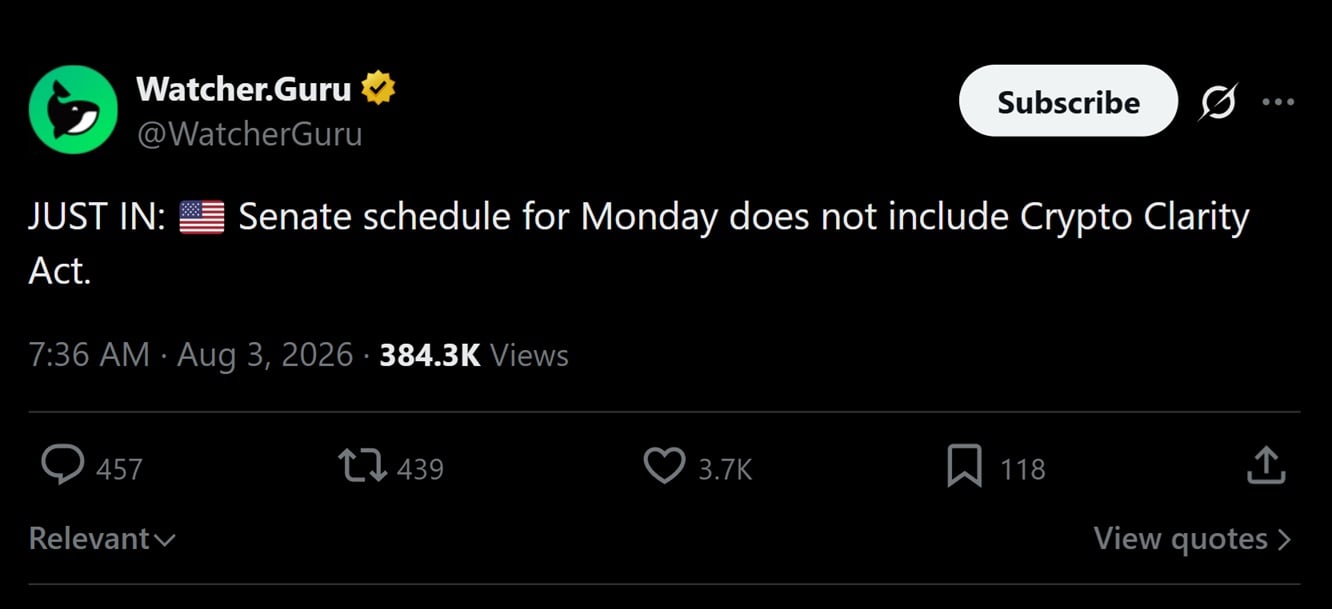
The Senate’s schedule contains no floor vote on the Digital Asset Market Clarity Act, the House-passed bill meant to divide crypto oversight between the Securities and Exchange Commission and the Commodity Futures Trading Commission. The upper house has until Friday to pass the CLARITY Act before lawmakers break for the August recess, after which the chamber will not return until September 14.
Senate Majority Leader John Thune has said he intends to bring the bill to the floor before recess, a move that would force senators to go on record even if the legislation cannot clear the 60-vote threshold needed to overcome a filibuster. But a crowded pre-recess calendar and unresolved disputes among senators over enforcement powers, decentralized finance, anti-money laundering rules, and stablecoin provisions have kept a firm date off the books.
Esper Calls the Bill a National Security Imperative
The stakes escalated this week when former Secretary of Defense Mark Esper, who joined Coinbase’s Global Advisory Council in 2023, called the CLARITY Act a national security imperative and warned this week may be the last real window to pass it.
Majority backers argue it strengthens national security by bringing digital assets into a clear regulatory system, while a minority staff analysis countered that the CLARITY Act fails to address vulnerabilities exploited by criminals and foreign adversaries.
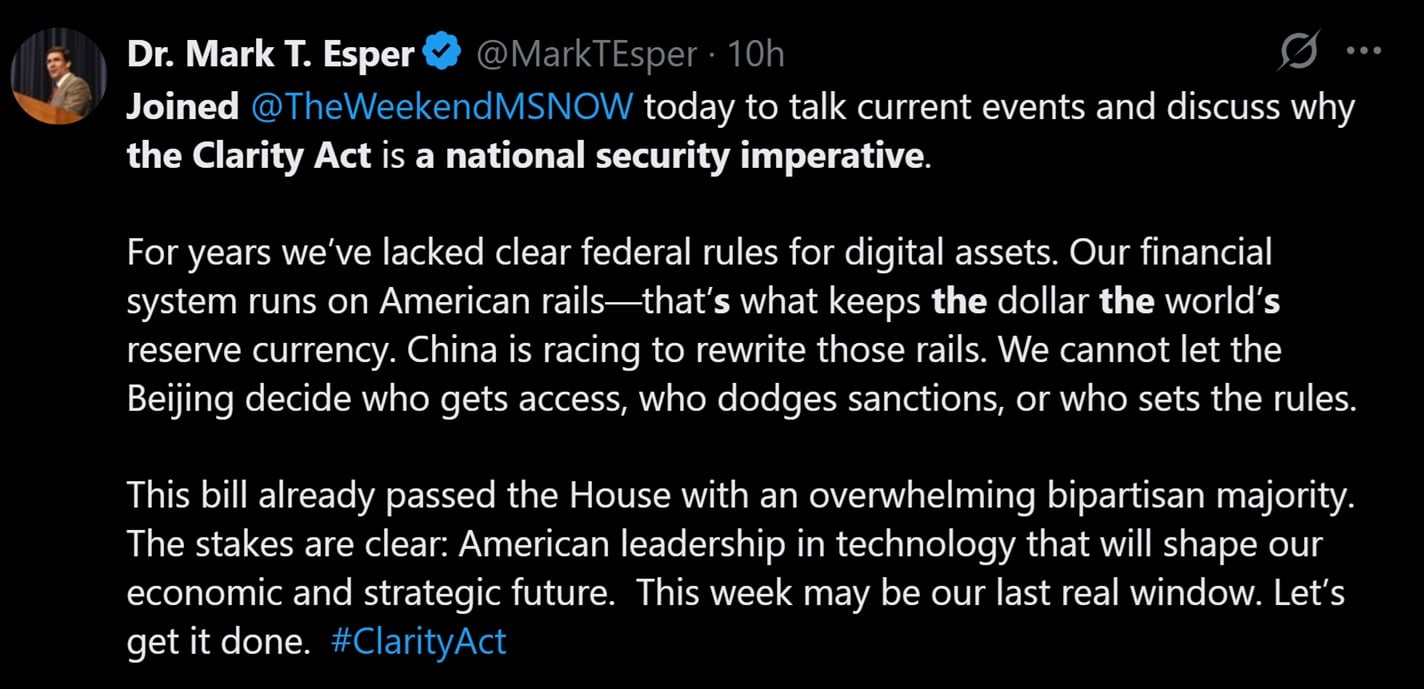
The national security ideology isn’t new to Washington’s crypto debate, but Esper’s involvement adds a recognizable, bipartisan-coded voice to a fight that has increasingly split along partisan lines. Senator Mark Warner has separately conditioned his support on closing what he sees as national-security gaps around decentralized finance.
Industry Pressure Builds Before Recess
The lobbying push has intensified alongside the shrinking timeline, with Bitcoin.com News reporting recently that Grayscale urged Senate leaders to hold a CLARITY Act vote before the August recess, warning that further delay threatens U.S. competitiveness in digital assets. Separately, Stand With Crypto said supporters had contacted lawmakers one million times urging passage before the Aug. 7 break, according to Bitcoin.com News.
The bill’s odds have wavered under the pressure of the deadline, with Galaxy Research cutting its estimated probability of CLARITY Act enactment in 2026 from 50% to 30%. Moreover, Treasury Secretary Scott Bessent has pushed back hard against critics of the bill, demanding Senate action now, while a Senate Banking Committee minority staff analysis renewed Democratic objections that the bill preserves pathways for President Trump to continue profiting from crypto ventures after disclosures showed about $1.4 billion in 2025 earnings tied to his crypto activities.
Enforcement Concerns add Another Wrinkle
The national-security framing has been joined by a state-enforcement argument, given New York Attorney General Letitia James urged Congress to strengthen cryptocurrency regulation as the FBI reported more than $11 billion in crypto-related losses (arguing the pending CLARITY Act would actually weaken state enforcement against digital asset scams rather than tighten it).
That critique lands alongside a separate report on a fresh Senate threat tied to the president’s crypto gains, once again showing just how the bill’s remaining obstacles now span national security, state enforcement, and ethics all at once.
What Happens If the Senate Misses Friday
If the Senate fails to act by Friday, the CLARITY Act will not return to the floor until senators reconvene on September 14, pushing the debate into a compressed midterm-year calendar where crypto legislation could get crowded out by other priorities. Bitcoin.com News has reported the bill is now under serious risk of getting lost in midterm politics entirely, a scenario that would leave crypto firms operating under the current patchwork of SEC and CFTC guidance for months longer.
Strategy and its executive chairman Michael Saylor threw their support behind the bill last week, joining a growing list of industry names, including Coinbase and Grayscale, publicly pressing for passage. Whether that pressure translates into floor time before Friday remains the open question hanging over crypto markets this week.