
Can AI Look at Your Retina and Diagnose Alzheimer’s? Eric Topol Hopes So
For decades now, it’s been fairly well established that once you turn 40 you should start paying attention to your body. That’s when women are supposed to start getting mammograms and men are supposed to start paying a bit more attention to their prostates. Over the next decade, you’ll start getting colonoscopies, and from then on out, it feels like a gradual march of doctor’s appointments and tests until your body collapses sometime in your ‘70s or ‘80s.
But what if modern medicine has the timeline all wrong? What if we’re testing some middle-aged people unnecessarily for diseases they’ll most likely never get, but blindly ignoring 20-somethings who might be prone to colon cancer? Is there a way that, even as we age, we can stay healthy in a way that’s both meaningful and not reliant on taking 12 horse-sized pills every morning?
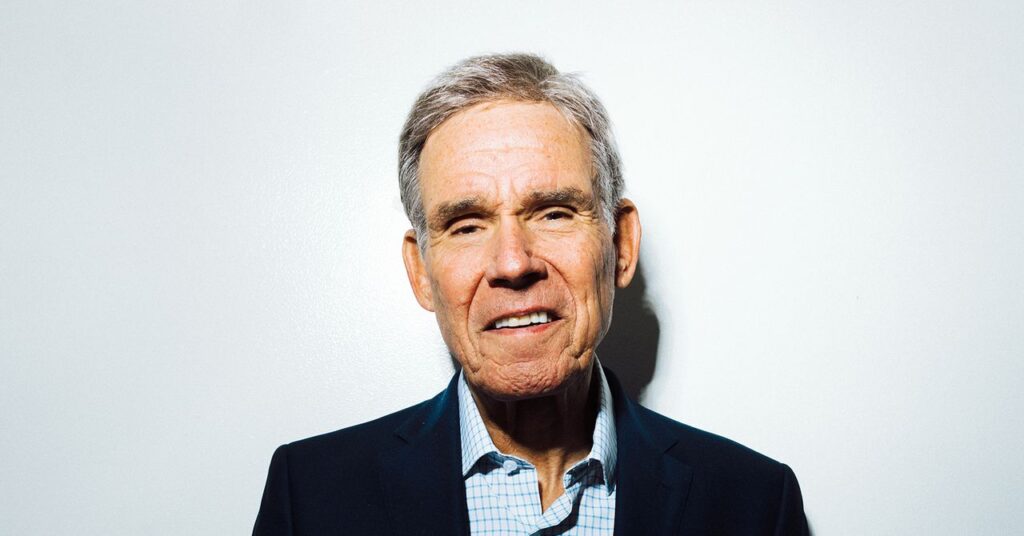
Eric Topol certainly thinks so. The cardiologist, vice president of Scripps Research, and author of Super Agers is convinced that new innovations in AI-assisted medicine, bioengineering, and anti-inflammatory awareness could have potential to revolutionize the way people age.
During WIRED’s Big Interview event in San Francisco on Thursday, Topol told features editor Sandra Upson that while he was working on Super Agers he learned that there’s a difference between lifespan and healthspan, and that neither has much to do with genetics. Someone who’s “wellderly,” or over 65 and generally healthy, has pretty much the same genetic makeup as someone who’s elderly and facing major health challenges, like heart disease, cancer, or a neurodegenerative disorder.
Instead, Topol said, there appears to be a correlation between having a healthy immune system and aging healthily. Lifestyle can influence how healthy you are, too, with Topol advocating for eating a diet low in ultra-processed foods, focusing on sleep quality over sleep quantity, and getting out in nature. He also recommended getting exercise, focusing both on aerobic work and resistance and balance training, which can help the body become more resilient as you age.

Photograph: Annie Noelker

Photograph: Annie Noelker
If possible, Topol said, people should avoid environmental stressors, like air pollution, micro and nano plastics, and forever chemicals, all of which Topol said are pro-inflammatory. All of these, Topol noted, are not being addressed by President Trump and Robert F. Kennedy Jr., despite their Make America Healthy Again agenda.
For the average American, Topol said healthspan is about 63-65 years. Lifespan, on the other hand, is about 80 years. That means most Americans will spend the last 15 or so years of their lives in relatively poor health, with one World Health Organization stat saying that most elderly people will only experience one “healthy birthday” after the age of 65.
“Healthspan should be extended as close as we can to lifespan, and I think we can do it,” Topol told Upson. “This is a unique moment in medicine. Part of it is because we have multi-modal AI, but part of it is because we have new layers of data. We never had organ clocks, which track the pace of aging for every organ of your body, including your immune system. We never had biomarkers like p-tau217, which tells us about our risk of Alzheimer’s 10, 15, even 20 years in advance. The biggest jump in recent biomedicine is the ability to quantify metrics of aging.”